Racking Removal in Meridian: What the Job Includes and What Drives Cost
Racking removal in Meridian comes down to emptying the racks, taking the beams and frames apart from the top down, pulling the floor anchors and hauling the steel off to be recycled, and how much of that work your space needs is what sets the price. A small back-room setup and a long row of tall, anchored bays follow the same steps. They just don't take the same amount of labor.
What is a racking system?
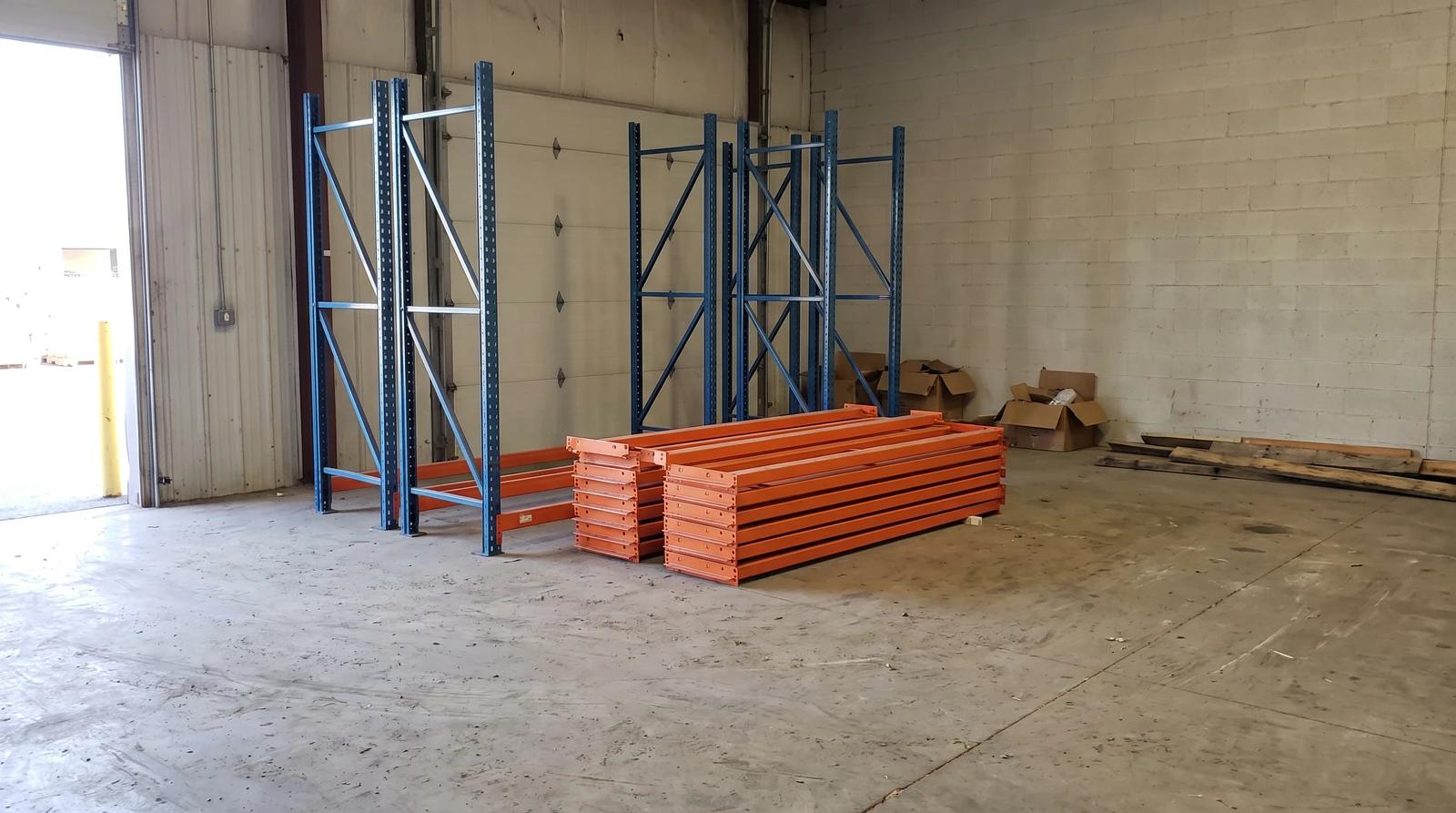
A racking system is the steel storage setup you see in warehouses, shops and big retail back rooms around Meridian, Idaho. Upright frames stand on the floor, horizontal beams hold the pallets, and wire decking or boards usually sit across the beams. Each section between two frames is called a bay.
Pallet racking is built to hold heavy loads stacked high, from boxed stock to shop equipment. That's also why professional pallet rack removal takes more than a couple of people with a wrench.
The components are heavy, the frames are tall, and everything locks together in a sequence that has to come apart in the right order. Some systems are bolted to the floor, too.
Pallet racking removal in Meridian: what the job includes
The job includes five parts: the walk-through and price, emptying the racks, the takedown, the floor anchors and the haul. The scope changes from one building to the next. The order doesn't.
Free walk-through and a firm price before anything is touched
Every job starts with a free on-site estimate. Someone walks the space and looks at how many bays you have, how tall they are, whether they're anchored, how long the carry out is, what equipment the job needs and what else is going on the load.
You get a firm price at the end of that walk-through, before any steel moves. Pricing is based on the space and the work involved, and no hidden fees get tacked on later.
Worth asking: Ask any expert removal services you call whether anchors, decking, hauling and recycling are all in the price. If any of those cost extra, you want to know before the first beam comes down.
Emptying the racks: what's on you and what's on the crew
Product, inventory and anything you plan to keep is on you. It's your stock and you know where it's going, so loop in whoever runs inventory management early.
The crew handles everything you don't want. Broken pallets, old cardboard, busted shelving, dead equipment that's been parked on the top level for years. If it's junk, it can ride on the same trip as the steel.
The racks need to be empty, or close to it, before the crew starts. Nobody should be pulling pins on a loaded beam.
Rack teardown: beams, decking and uprights from the top down
A rack teardown runs from the top down. The crew takes off the wire decking and any safety bars first, then the top beams, then works down level by level until only the upright frames are standing.
Beams lock into the uprights with clips or pins. The crew has to remove those one at a time, and each beam gets lowered, not dropped. On taller racks that means ladders or lift equipment, and more than one set of hands on every beam.
Once the beams are off, each frame gets unbolted from the floor and laid down under control. Then it's broken down into pieces that are easy to carry and stack.
Heads up: Bent or forklift-damaged uprights don't always come apart cleanly. Years of small hits can bind a beam in place, which slows the work and is a big reason the walk-through matters.
Floor anchors and what's left in the slab
Floor anchors are the bolts that tie each upright's base plate to the concrete. Most are wedge-style anchors set in drilled holes, and they don't just unscrew and pop out.
The usual approach is to take the nut off and either remove the anchor or cut it flush with the floor, so nothing sticks up to trip someone or catch a pallet jack. Either way, you're left with small holes or steel stubs in the slab.
If you're leasing, read your lease. Some landlords want those holes filled before you hand back the keys, and that's a patching job, not a junk removal job.
Loading, hauling and recycling the steel
Loading is where good access pays off. Frames and beams get stacked and strapped so they don't shift during handling, and the crew makes as many trips as the load takes.
Racking steel is about as recyclable as it gets. Clean beams, frames and wire decking can go to a scrap metal recycler in the Treasure Valley instead of the Ada County landfill. Racks still in good shape can sometimes be set aside for reuse.
Wood decking and mixed junk get sorted out. Whatever can be donated or recycled goes that way, and the rest is disposed of properly.
Racking removal cost: what pushes it up or down
The cost depends on how much steel there is, how hard it is to tear down and how hard it is to get out of the building. No flat rate fits every Meridian pallet rack job, which is why the price comes from the walk-through.
Number of bays and how tall the racks are
Bigger systems with more bays mean more beams, more frames and more trips. That part's simple.
Height matters almost as much. Short racks can often come apart from the floor. Tall ones need lifts or ladders, more hands per beam and more care on every piece, so each bay takes longer.
Anchored vs. free-standing frames
Free-standing frames come apart faster. Unclip the beams, tip the frame, move on.
Anchored frames add a step at every base plate, and some setups have more than one anchor per upright. Rusted anchors take longer still. Row spacers, wall ties and overhead ties count too.
Quick tip: Check a few base plates yourself before the walk-through. Knowing whether the racks are bolted down, and how many anchors each one has, helps you compare quotes on equal terms.
Access: dock doors, forklifts, tight aisles and back rooms
Access is the factor people forget. A building with a loading dock and wide aisles is a very different job from a narrow back room behind a storefront with one standard door.
A dock lets the crew walk steel straight onto the truck. Without one, everything gets carried out and lifted. Tight aisles slow every step, and a long carry from the back of the building adds labor to every piece.
If you've got a forklift on site and someone trained to run it, mention that at the walk-through. That equipment can change how the load gets staged.
Weather plays a part, too. An icy loading area in January or a metal building in late July slows the work down, even though the steps stay the same.
Adding shelving and other shop junk to the same trip
Adding other junk to the same trip usually beats booking a second one later. Old shelving units, office furniture, dead equipment and the leftovers from a warehouse shutdown can all ride with the steel.
It does add to the price, since it's more volume and more handling. Still, it's worth pricing both ways at the walk-through. For a full move-out, commercial junk removal can take the rest of the building's contents in the same visit.
Does OSHA require warehouse racking to be bolted to the floor?
OSHA doesn't have a standard written just for pallet racks. Its general storage rule says stored material has to be stable and secure against sliding or collapse, and the industry design standard for racks calls for anchoring, which is why most racks are bolted down.
Racks take bumps from forklifts and other equipment, and bolted systems are far less likely to shift after a hit.
Racking removal FAQ
How long does racking last?
Racking doesn't have a set lifespan. Well-kept steel can stay in service a long time, but forklift hits, overloading, rust and missing parts can end it early. A bent upright should come out of service no matter how old it is.
Does racking need to be certified?
There's no single national certificate for existing racking in the U.S. New or tall installs can fall under local building and fire codes, which may mean a permit and engineering, so check with the city's building department before anything goes up.
Can old racking be reused or donated?
Often, yes, if it's in good shape. Straight uprights, clean beams and matching parts from the same system can go to another business that needs storage. Bent or rusted pieces go to scrap, where the steel still gets recycled.
How do I get a price on Meridian pallet rack removal?
Related reading: Restaurant Junk Removal: Equipment, Furniture and Overflow Pickup and Commercial Junk Removal Without Closing Shop in Boise.
Boise Junk Removal provides pallet racking removal services across Meridian and the rest of the Treasure Valley, with same-day service when the schedule allows. Call (208) 248-3629 to set up a free walk-through, and you'll have a firm price before anything comes down. Cash, card and Venmo all work.
Ready to Clear Out the Clutter?
We'll haul it away so you don't have to. Free estimates, same-day service available.
More From Our Blog
What Is the Cheapest Way to Get Rid of Junk Once You Count Your Time?
What is the cheapest way to get rid of junk? Use free donation, curbside and scrap options first, then compare the real cost of hauling the rest.
Mulch Removal Services in Boise: When and How to Clear Old Beds
Mulch removal services explained: when old mulch needs to come out, how to get rid of it, what's involved and what moves the cost up or down in Boise.
Junk Removal Cost Calculator: Why Where Your Junk Goes Changes the Price
A junk removal cost calculator sizes your pile, but sorting, carrying and disposal set the real price. Learn to size and sort your junk before you call.
