Furniture Removal in Kuna
Delivering fresh starts since 2022
Kuna's growth shows up in two very different kinds of furniture jobs. One is the subdivision clear-out in a place like Patagonia or Crimson Point, where you're working a tight driveway and a garage stacked floor to ceiling with furniture nobody got around to using. The other is the acreage job south and west of town, where an old couch or dresser has been sitting in a barn or shop for years waiting on a trip to the dump that never happens.
Both end with the same question: how does this stuff actually leave the property, and where does it go once it does. What you're hauling, how it's packed in, and where it's headed all change what the job looks like, whether you're clearing a house near downtown Main Street or a hobby farm off Indian Creek.
What Drives the Cost and the Time
Furniture removal isn't one flat job. A single chair by the garage door is a different trip than a full living room, a bedroom set, and a mattress all going at once. Volume is the first thing that moves the job up or down.
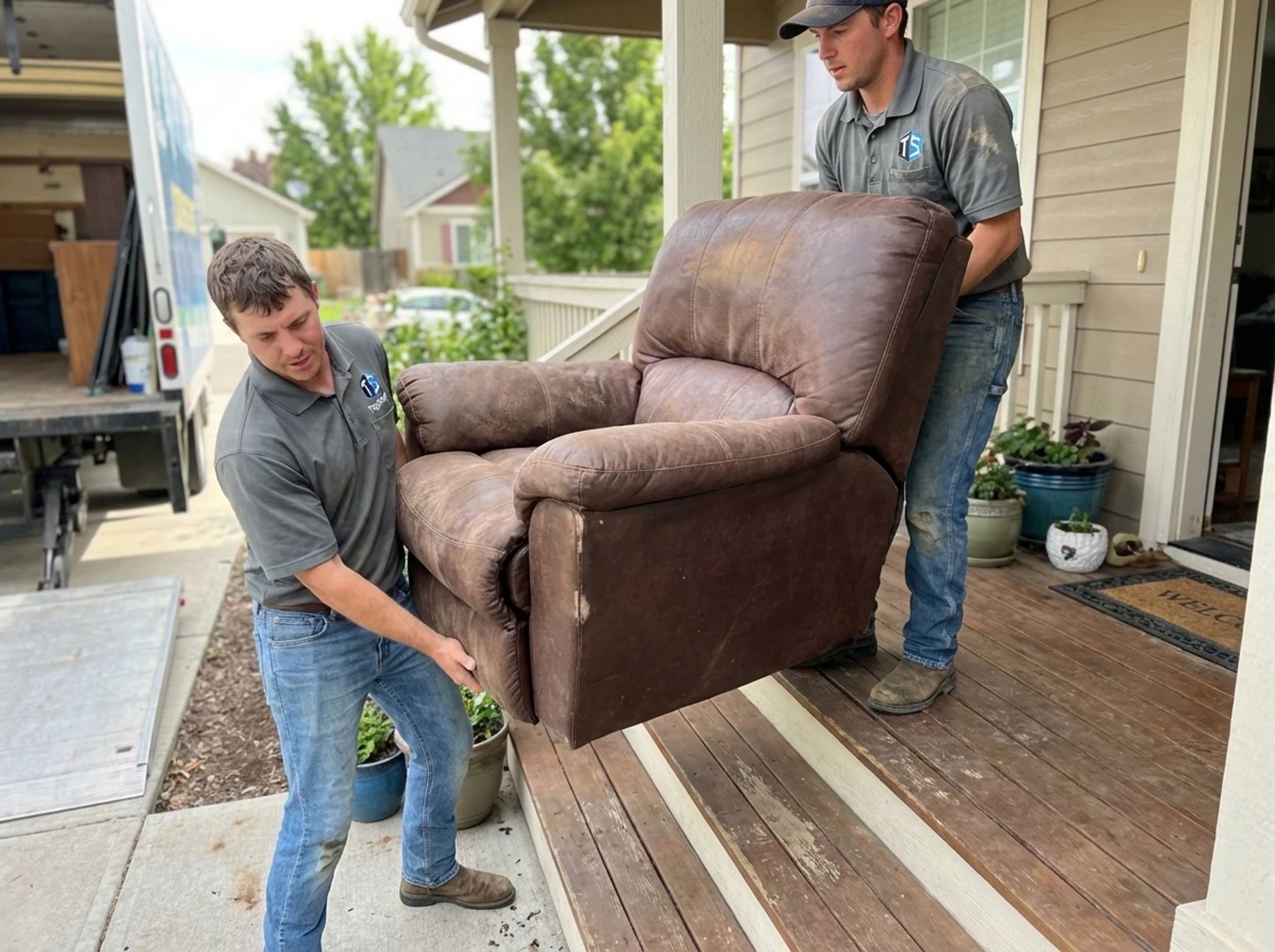
Access matters just as much. A piece that has to come down a narrow hallway, around a tight stairwell, or out of a packed garage takes longer than one sitting curbside. Solid wood and metal-frame pieces also weigh more than they look, which affects how a crew handles and loads them.
Where it's headed matters too. Furniture that's still in decent shape can sometimes be donated instead of landfilled, which changes the destination but not necessarily the effort to get it out of the house.
- How much is coming out: one piece versus a full room or house
- How it has to travel: stairs, tight hallways, a crowded garage, a long driveway
- What it's made of: solid wood and metal frames are heavier than they look
- Whether it's still usable: donatable pieces route differently than worn-out ones
- What's mixed in around it: boxes, yard debris, or other junk piled with the furniture
Access Looks Different Depending on Which Kuna You're In
Newer subdivisions like Patagonia and Crimson Point sit on smaller lots, often a third of an acre or less, with driveways and garages that fill up fast. A crew working one of these needs a clear path from the furniture to the driveway, and if the piece is in a garage, enough room to maneuver it out without scraping a car or a doorframe.
Rural acreage and hobby farms outside city limits are a different setup entirely. Long gravel driveways, gates, and outbuildings mean a crew needs directions and gate access sorted out ahead of time, not figured out on arrival. If the furniture is in a shed or barn instead of the house, say so up front.
Either way, a few minutes of prep before a crew shows up saves real time on the job: move vehicles out of the driveway, clear a walking path, and flag any stairs or tight turns in advance.
A Couple of Mistakes Worth Skipping
Burning old furniture on acreage is tempting, but it's not what Kuna's no-permit burning rule actually covers. That allowance is for weeds and vegetation under a small diameter, not lumber, treated wood, or upholstered pieces, and burning gets shut off entirely whenever regional air quality hits the posted threshold. It's also never allowed on the BLM land south of town.
Setting a dumpster or container out on the street without checking first is another one. Kuna's streets fall under county road authority, and a container sitting in the roadway, sidewalk, or shoulder needs a right-of-way permit before it goes there.
And if a load includes treated or painted wood, don't count on it being accepted wherever clean wood gets diverted. Painted and treated lumber usually has to go a different route than untreated scrap.
None of this has to be figured out alone. If you're clearing a subdivision garage or an acreage shop full of furniture, Boise Junk Removal can take a look and tell you what the job actually involves before anything gets hauled. A quick call gets you a free estimate.
